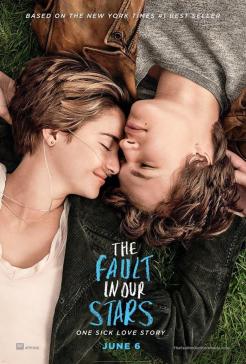
I had intended to write an in-depth review of the new film A Fault in Our Stars. A real review. Turns out, I really don’t need to. You can take the word of millions of teenaged girls (and girls at heart). The film was a huge winner at the box office during its opening weekend. It made $48 million, beating out the strangely dark Disney offering Maleficent and the “I refuse to admit I’m no longer a heart-throb” Tom Cruise vanity vehicle. And now, Hollywood has come to the realization that FEMALES WATCH MOVIES! There don’t have to be shootings, explosions, car chases, robots, or even super heroes. There doesn’t have to be a roman numeral in the title, and studios can actually release a movie with a plot, a good script, and fine acting in the summer. Who knew?
Back to the film.
I went with my almost 14 year old daughter. We’ve both read the book. Me, once. Her- nine times. We were both crying within the first 5 minutes. And that’s a good thing. It was a bonding experience. I had recommended the book to her. She didn’t want to see the movie – the first time, anyway – with anyone but me. Those experiences, as she gets older, are becoming few and far between. It was precious.
The Fault in Our Stars is beautiful story. It’s a story about living in the moment, regardless of what that moment is. And ultimately, it a life-affirming story about strength, honesty, and acceptance. I won’t go too much into plot description – it’s about two teens who meet at a cancer support group and fall in love. And it certainly has struck a chord with young people. When I was a teen, there were several books and movies based on the same premise. Death Be Not Proud (starring the ever-delicious Robbie Benson), Love Story (meh), even After School Specials that dealt with the difficult subject matter. We had films like Ice Castles, even made for t.v. movies like Champions: A Love Story (Remember Jimmy McNichol?). These shows allowed us that catharsis, that ability to vicariously experience tragedy and all the emotions that come along with it. Today’s teens haven’t had that. They’ve seen the violent deaths of teens and kids dystopian society stories and fantasies. They’ve seen the star-crossed, doomed romance between girl and vampire. And sadly, they see all too frequently, seemingly endless reports of school shootings and violent attacks on the news, glossed over and soon forgotten. I’m afraid in our current cultural climate our children are in danger of becoming desensitized to death. They haven’t been exposed to loss in a realistic, “this could happen to me” setting. Not really. Until now. That’s why I think The Fault in Our Stars is an important film.
Shailene Woodley, who plays Hazel, gives an excellent performance. She is certainly one to watch. Never once did I get the feeling that she was acting. Hazel, having battled cancer for much of her adolescence, is feisty, intelligent, and cynical about the whole situation Gus, played by Ansel Elgort, is the perfect boyfriend and counter to Hazel. He’s charming, disarming, and persistent. Almost too good to be true (for this experienced, jaded no-longer-a-teenaged-girl anyway). But you can’t help but love the guy. He’s so earnest and sweet in that smart-ass kind of way. Hazel’s parents (although a little “Disney-fied” for my taste) are played by two excellent actors. The always magnificent Laura Dern, who can do no wrong in my opinion, takes on the role as Hazel’s mother. She’s brilliant as usual. I just wish her role had been a bit meatier. Hazel’s dad, in a stunning feat of rebranding, is played by Sam Trammel, hunky shape-shifter Sam Merlotte in HBO’s True Blood. Thanks to this ingenious bit of casting, Trammel has established himself not only as a hottie in the minds of women in my age group, he’s now cemented in the psyche of millions of teens world-wide as the perfect father figure. His agent is a genius. There is also an entertaining cameo by a well-known, big-name Hollywood actor. I won’t spoil the surprise because it kind of made the movie for me.
Bottom Line – see this film. It’s wonderfully acted. Nicely paced, An authentic, endearing story. And don’t forget to bring the tissues. And take along a teenager. You won’t regret it.
*Literary Nerd Alert: The title is inspired by Act 1, Scene 2 of Shakespeare‘s play Julius Caesar, in which Cassius says to Brutus:
“The fault, dear Brutus, is not in our stars, / But in ourselves, that we are underlings.”
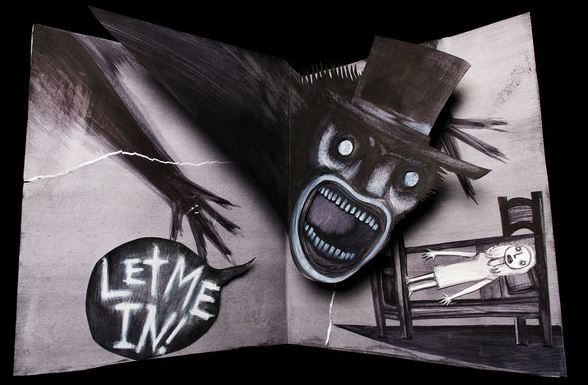 I love indie film. I pride myself in finding those obscure gems to share. I am especially drawn the horror & thriller genres. The more twisted, twisty, confusing, confounding, the better. The kind of story where you wake up in the middle of the night, 3 days later, with an epiphany about a scene or a metaphor or a twist. Not gore or torture for the sake of gore and torture, but a work that makes you think.
 The Middle-Aged Ingenue
You must be logged in to post a comment.